 Save
Save I'll never forget the December evening when my friend Sarah challenged me to create something special for our annual holiday gathering. She wanted everyone to feel celebrated, and that's when the idea struck me—what if each guest got their own curated cheese experience? I spent that afternoon hunting through specialty shops, selecting twelve different cheeses from around the world, each with its own perfect companion. When I unveiled that board at dinner, the way their faces lit up made me realize this wasn't just food; it was twelve little moments of joy, one for each day of the season.
Last year, I made this for my in-laws' holiday party, and I watched as my mother-in-law discovered that she actually loved blue cheese when paired with pear—something she'd avoided her whole life. That single revelation made the entire project worth it. My nephew went back for thirds, declaring himself the official cheese taster of the family. That's when I understood the real magic: a thoughtfully arranged board can change how people think about flavors they thought they knew.
Ingredients
- 50 g Brie: This creamy, delicate cheese needs a sweet companion like honey and apple to let its gentle flavor shine—buy it close to serving time so it's at its most luscious
- 50 g Aged Cheddar: Look for one with a bit of crystalline texture; it pairs beautifully with fig jam and the earthiness of walnuts
- 50 g Manchego: This Spanish sheep's milk cheese has a subtle nuttiness that makes it the perfect partner for quince paste and toasted almonds
- 50 g Roquefort or Blue Cheese: The bold, funky notes need the sweetness of ripe pear and the earthiness of walnut to balance
- 50 g Goat Cheese: Its tangy brightness comes alive when scattered with fresh thyme and paired with the sweetness of grapes
- 50 g Gruyère: This nutty, caramelized cheese becomes even more interesting when cut against the sharp bite of whole grain mustard and a crisp cornichon
- 50 g Camembert: Similar to Brie but earthier, it needs bright partners like crisp apple slices and the slight bitterness of toasted almonds
- 50 g Gouda: Its subtle sweetness becomes mysterious when you pair it with the chewy intensity of dried apricot and a tiny piece of dark chocolate
- 50 g Comté: One of the most complex cheeses, it deserves simple companions like grapes and walnuts that let its depth speak
- 50 g Pecorino: This hard, peppery sheep's cheese softens when met with sweet honey and the gentle perfume of fresh pear
- 50 g Havarti: This Danish cheese is buttery and approachable—fig jam and almonds turn it into something memorable
- 50 g Smoked Cheese: Use smoked provolone or another smoked variety; pair it with the brightness of cornichons and the bittersweet surprise of dark chocolate
- 12 slices artisanal bread or assorted crackers: These are your blank canvas—choose ones sturdy enough to hold cheese without crumbling
- 2 tbsp honey: Use the best quality you can find; raw honey has more personality
- 2 tbsp fig jam: This is your secret weapon for making ordinary cheeses feel extraordinary
- 2 tbsp whole grain mustard: The texture and slight heat elevates sharp cheeses
- 24 seedless grapes: Buy them a day or two before serving so they're perfectly chilled and juicy
- 12 dried apricots: Look for ones that are still slightly soft; they should taste like sunshine
- 12 walnut halves: Toast them lightly yourself if possible—the difference is profound
- 12 toasted almonds: Their slight bitterness is the perfect foil for creamy cheeses
- 12 thin apple slices: Use a crisp variety like Honeycrisp or Granny Smith; slice them just before serving to prevent browning
- 12 slices fresh pear: Again, slice these at the last moment—they brown so quickly
- 12 pieces dark chocolate: Quality matters enormously here; use chocolate that makes you happy
- 12 cornichons: These tiny pickles provide the sharp, briny note that makes certain pairings sing
- Fresh herbs (thyme, rosemary): These garnish the board with color and add whispers of flavor to several pairings
Tired of Takeout? 🥡
Get 10 meals you can make faster than delivery arrives. Seriously.
One email. No spam. Unsubscribe anytime.
Instructions
- Choose your canvas:
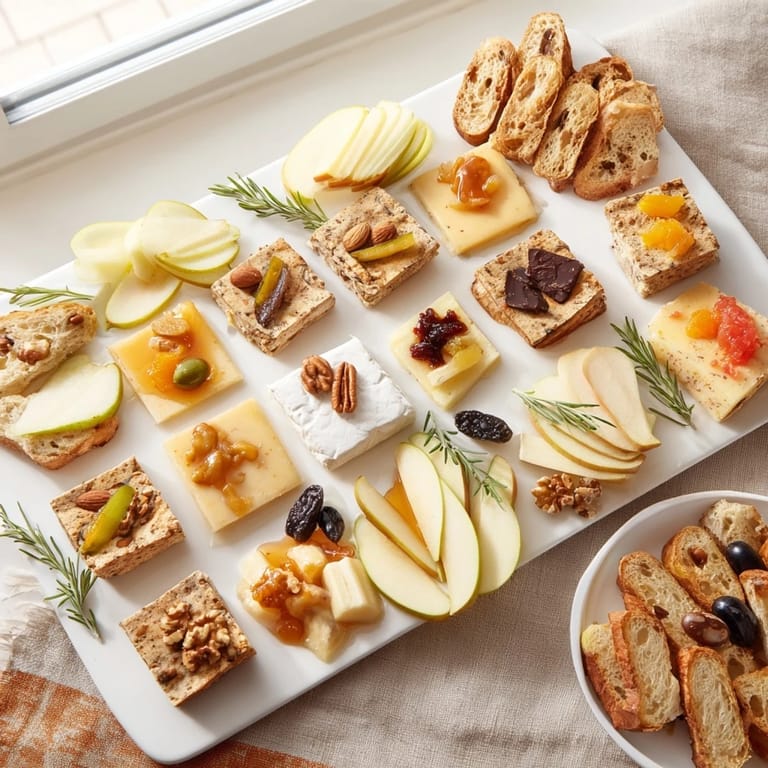
- Find a large serving board or platter that speaks to you—something that feels special because you're creating something special. If it's marble, wood, slate, or even a large cutting board, it matters less than the care you put into it. Stand back and imagine how you'll divide it into twelve equal sections, each its own little kingdom.
- Divide the space with intention:
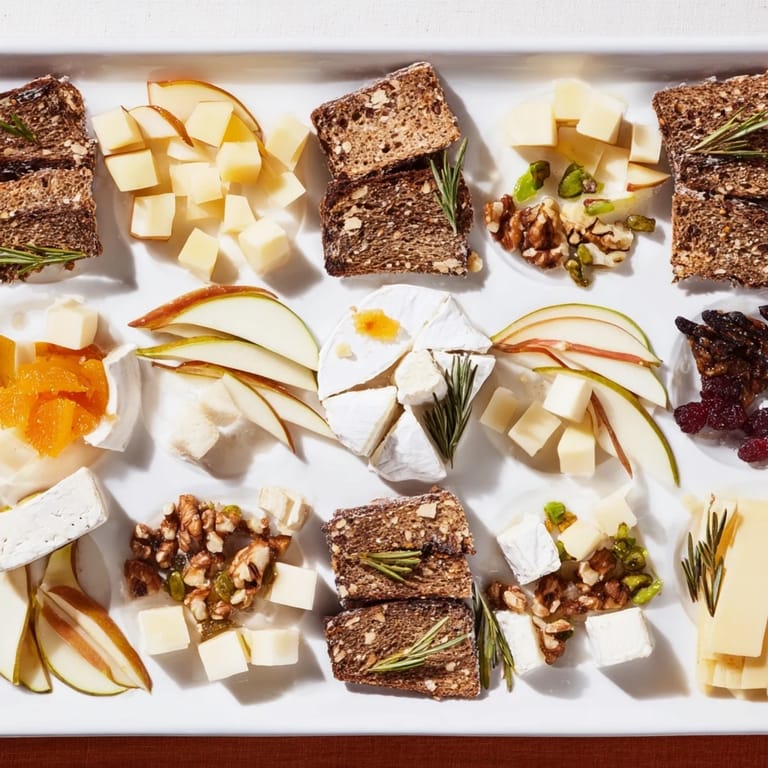
- Using small bowls, ramekins, or even just visual lines created with your arrangements, gently mark out twelve sections. Some people use garnish to create lines—tiny herb sprigs work beautifully for this. You're not building walls; you're creating destinations.
- Place your cheeses with care:
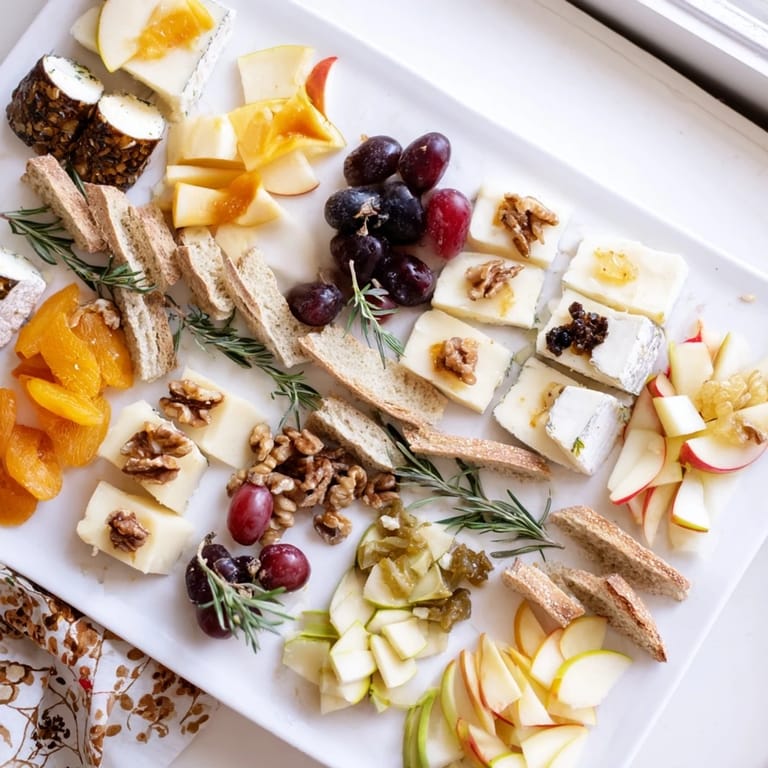
- Now comes the meditative part. Set one cheese in the center or off to the side of each section, depending on what looks beautiful. Cut harder cheeses into bite-sized pieces or small wedges; leave soft cheeses mostly whole. Touch each piece as you place it—this isn't just assembly, it's curation.
- Build each pairing like you're telling a story:
- For each section, add its companion items: Brie gets a drizzle of honey and a thin apple slice positioned like it's about to touch the cheese. Aged Cheddar gets a small spoonful of fig jam and a walnut nestled beside it. This is where the magic happens—you're not just combining flavors, you're creating moments of discovery. Work slowly. Taste as you go, even if just imagining.
- Arrange the crackers like pathways:
- Place bread or crackers around the board's perimeter, fanning them slightly or arranging them in clusters. There should be enough so that each person can try each pairing without scrounging. Think of the crackers as the vehicle that carries each person on their journey through twelve flavors.
- Finish with grace:
- Scatter fresh thyme and rosemary across the board—not everywhere, but in moments of green that catch the light. These herbs aren't just decoration; they're whispers of flavor, hints of what's possible.
- Serve at the moment of perfect readiness:
- Bring the board to the table at room temperature, where all the cheeses can express their true character. This is the moment you step back and watch people discover something they didn't know they were hungry for.
 Save
Save There was this moment at my last dinner party when someone tried the Pecorino with pear and honey, and they closed their eyes like they'd just heard their favorite song. I realized that this board isn't really about the cheeses at all—it's about creating space for people to slow down and pay attention. It's about saying, 'I've thought about what brings you joy, and here it is, on a board.'
The Art of Pairing
The magic of a cheese board lies in understanding that flavors are conversations. Soft, creamy cheeses sing when paired with something sweet or bright. Aged, complex cheeses want partners that won't overpower them—they need a supporting actor, not a leading role. The umami notes of aged Cheddar find their match in the deep sweetness of fig jam. The funkiness of Roquefort transforms when it meets the delicate perfume of pear. As you arrange each section, think about what the cheese is trying to say and choose a pairing that lets it speak clearly. This is how you move from simply serving food to creating an experience.
Timing and Preparation
The beauty of this board is that nearly everything can be done hours in advance, which means you can actually be present with your guests instead of locked in the kitchen. Cut your harder cheeses and arrange them on the board in the morning if you like. Keep them covered gently with plastic wrap or a cloth in a cool place. Wait until closer to serving time for delicate items like apple and pear slices—slice them just ten minutes before bringing the board out. This way, each component is at its finest moment, and the board arrives at the table looking like it was just created. Your guests will marvel at how effortless you made it all look.
Making It Your Own
This isn't a rigid recipe; it's a framework for your own creativity. The twelve sections give you structure, but within that structure, you have complete freedom. Love beets? Add roasted beets to a section with goat cheese. Have an obsession with honey from a local beekeeper? Give it pride of place. Found an incredible quince paste at a specialty shop? Build a pairing around it. The twelve days structure works beautifully for holiday gatherings, but you could just as easily create a twelve-cheese board around a theme—all soft cheeses, all from one region, all with chocolate pairings. Let your instincts guide you, and trust that if you choose with love and intention, it will be magnificent.
- Consider creating cards with small descriptions for each section to guide your guests—'Day Six: Gruyère meets mustard's sharp brightness'—it elevates the whole experience
- Remember that not every guest will eat every section, and that's perfectly fine; this board is about abundance and choice
- If you're serving wine, ask your cheese shop for recommendations; they love this conversation and will steer you right
 Save
Save Every time I make this board, I'm reminded that the most meaningful cooking isn't about technical skill or complicated techniques—it's about paying attention. It's about creating something that tells people they matter. This twelve-day board does that quietly and beautifully.
Recipe Questions & Answers
- → How should I arrange the cheese board for serving?
Divide a large board into twelve sections using small bowls or garnish lines. Place one cheese type per section with its pairing nearby for an attractive and organized presentation.
- → What accompaniments pair well with the cheeses?
Each cheese is paired with a unique accompaniment such as honey, fig jam, nuts, dried fruits, crackers, or fresh herbs that enhance flavor contrasts and textures.
- → Can this board be made vegan-friendly?
Yes, by substituting dairy cheeses with plant-based alternatives and selecting suitable accompaniments, this board can accommodate vegan preferences.
- → What is the best way to serve the cheese board?
Serve at room temperature to highlight the full depth of flavors and textures in the cheeses and sides, ensuring a delightful tasting experience.
- → Are there any allergen considerations?
This board contains dairy, tree nuts (walnuts, almonds), gluten from bread or crackers, and possible soy traces from chocolate. Check ingredient labels if needed.
- → Which wines pair well with this cheese selection?
Light reds, sparkling wines, or cider complement the diverse cheeses and their accompanying flavors, enhancing the overall tasting experience.