 Save
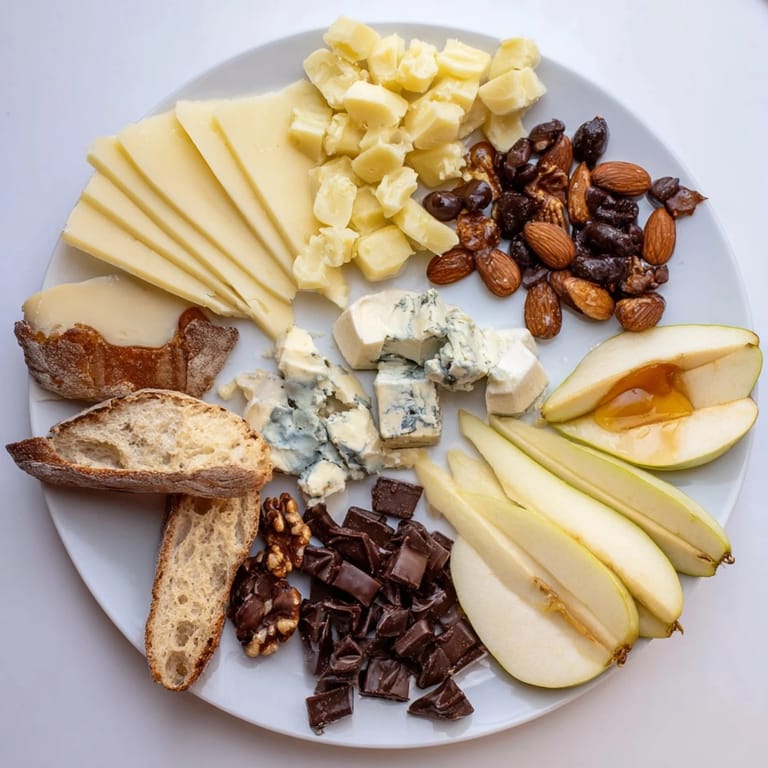
Save I still remember the first time I created this platter—it was on a crisp November evening when friends gathered unexpectedly at my kitchen, and I realized I had something special hiding in my pantry: aged cheeses, dark chocolate, and the makings of rich cocoa. I pulled together what felt like an indulgent puzzle, arranging chunks of cheddar and gouda alongside dark chocolate pieces, then heated milk infused with cocoa into something warm and comforting. That night taught me that the best meals aren't always planned—they're moments where good ingredients meet good company, and everything feels like home.
I served this to my sister last winter when she came to stay, and I watched her eyes light up as she reached for a piece of gouda, then a chocolate-covered almond, then took a slow sip of cocoa. That's when I knew this wasn't just appetizers—it was an experience, a way of saying 'I'm glad you're here' without needing words.
Ingredients
- Aged cheddar, 200 g, cut into large irregular chunks: The sharp bite of aged cheddar is essential here—it stands up beautifully against dark chocolate. I learned to cut them irregularly because it catches the light differently and makes the whole board look more generous and inviting.
- Aged gouda, 150 g, broken into wedges: Gouda brings a subtle sweetness and creamy texture that bridges the savory and sweet elements. Breaking it by hand, rather than slicing, gives it character.
- Blue cheese, 150 g, crumbled or chunked: This is your secret weapon—a small amount of blue cheese adds an unexpected depth that makes people pause and ask what they're tasting.
- Dark chocolate, 70% cocoa or higher, 120 g, broken into pieces: Quality matters more here than quantity. Higher cocoa content means less sugar, which lets the real chocolate flavor shine through and pair with the cheeses.
- Chocolate-covered almonds, 100 g: These add a satisfying crunch and are the bridge between platter and cocoa, giving your guests something to nibble while everything else comes together.
- Chocolate-dipped dried figs, 80 g: The chewy sweetness of figs coated in chocolate feels luxurious, like you've put real thought into this.
- Chocolate truffles, 60 g: A handful of good truffles elevates everything—choose ones you'd actually want to eat yourself.
- Baguette, 1 small, sliced: Toasted or fresh, the bread is your canvas for the cheeses. I prefer mine slightly warm.
- Roasted walnuts or pecans, 80 g: Roasted nuts add earthiness and texture, grounding the sweetness with their natural oils and slight saltiness.
- Pear, 1, sliced: The delicate sweetness and soft texture of pear complements aged cheese beautifully. Slice it just before serving to prevent browning.
- Apple, 1, sliced: Sharp and crisp, apple cuts through richness and keeps the palate refreshed between bites.
- Honey, 2 tbsp: A small bowl of honey becomes its own dipping station—drizzle it over cheese and nuts for a moment of pure indulgence.
- Whole milk, 500 ml: Full-fat milk creates a cocoa that's silky and rich, never thin or watery.
- Dark chocolate, chopped, 100 g: This is where the cocoa gets its body. Chopped rather than grated melts more evenly.
- Unsweetened cocoa powder, 1 tbsp: This deepens the chocolate flavor without adding extra sweetness. Sift it into warm milk to avoid lumps.
- Sugar, 1 tbsp, adjusted to taste: Start with less—you can always add more, and the chocolate truffles on the platter will provide plenty of sweetness nearby.
- Salt, a pinch: This tiny amount enhances every chocolate note and prevents the cocoa from tasting flat.
- Vanilla extract, 1/2 tsp: Added at the end, vanilla rounds out the cocoa and makes it taste like home in a mug.
- Whipped cream, optional: A cloud of whipped cream transforms the cocoa into something almost dessert-like.
- Shaved chocolate, for garnish, optional: A shower of dark chocolate shavings on top is purely for beauty and that first moment of luxury when you lift the mug to your lips.
Tired of Takeout? 🥡
Get 10 meals you can make faster than delivery arrives. Seriously.
One email. No spam. Unsubscribe anytime.
Instructions
- Gather your board and imagine the final picture:
- Take a large wooden board or platter and think about it like a painting. You want high points and low points, clusters and breathing room. Place the board in front of you and get excited about what's about to happen.
- Arrange the cheeses with intention:
- Start with your aged cheddar, breaking off large, irregular chunks and placing them across different parts of the board. Think rustic, think abundant. Leave gaps. Then add your gouda wedges, breaking them by hand so they have natural edges. Finally, scatter the blue cheese—it's strong, so less is more, but place it where it'll catch eyes.
- Add the chocolate elements with contrast:
- Break your dark chocolate into pieces about the size of walnuts and cluster them near the cheeses where they'll look like little jewels. Scatter the chocolate-covered almonds in groups of three or four, letting them catch the light. Arrange the chocolate-dipped figs in a small cluster—they're beautiful and should be seen. Nestle your truffles in gaps, treating them like the tiny treasures they are.
- Build the supporting cast around the edges:
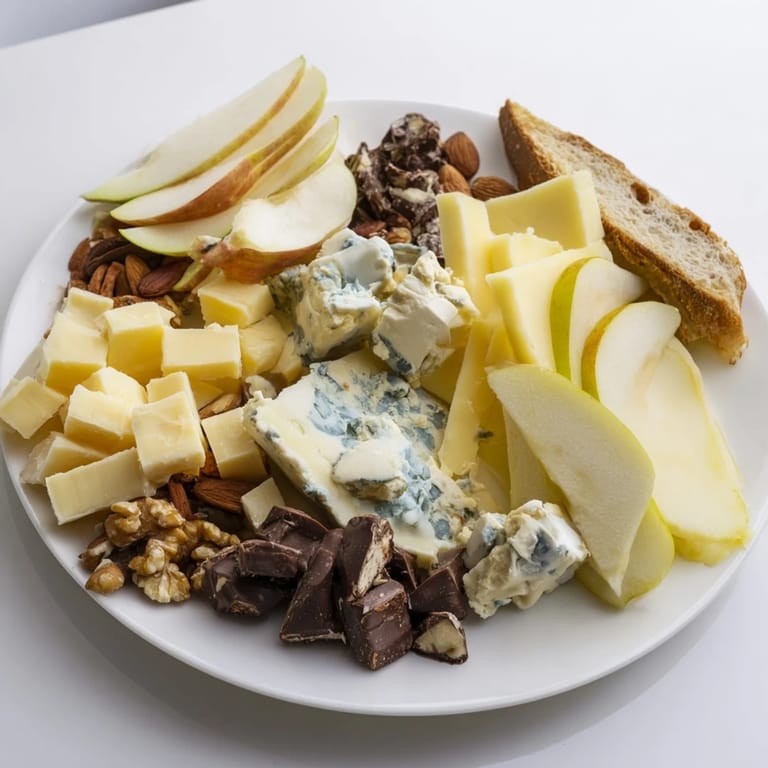
- Lean baguette slices against the cheeses at angles. Pile your roasted nuts in a small mound. Fan your pear and apple slices together so they look fresh and inviting. Pour your honey into a small bowl and place it where it's easy to reach but part of the whole composition.
- Heat your milk with patience and presence:
- Pour your milk into a saucepan and turn the heat to medium. Watch it, don't walk away. You're looking for little wisps of steam rising from the surface, that moment just before a simmer when the milk smells warm and alive. This takes about 5 minutes and is worth every second of attention.
- Whisk in chocolate and cocoa until silky:
- Add your chopped chocolate, cocoa powder, sugar, and salt to the warm milk all at once. Pick up your whisk and move it slowly at first, breaking down the chocolate pieces, then faster as it melts. You'll feel the texture change under the whisk—from grainy to smooth. Keep going until you can't see any flecks of cocoa powder and the whole thing looks like liquid velvet. This matters more than you'd think.
- Remove from heat and finish gently:
- The moment it's smooth, remove the saucepan from heat. Stir in your vanilla extract and take a moment to smell what you've created. If you want it sweeter, add a touch more sugar now.
- Pour and garnish with ceremony:
- Pour your cocoa into mugs, filling them generously but leaving room at the top. If you're using whipped cream, add a generous dollop. If you're using shaved chocolate, let it snow down on top. This is the moment your guests will see their drink before they taste it, so make it beautiful.
- Bring it all together:
- Set the platter in the center where everyone can reach it. Arrange the mugs of cocoa nearby, perhaps on a small side table or directly next to the platter. Light a candle if you have one. Step back and let people gather around something warm and generous and real.
 Save
Save I remember my grandmother watching me arrange the first platter like this, and she smiled in that way she had when she understood you'd finally learned something important. 'It's not about perfection,' she said, 'it's about generosity.' That stuck with me—every time I make this now, I think about her and what it means to put something on the table that says 'you matter, and I'm glad you're here.'
The Art of Board Building
Creating a cheese and chocolate board is less about following rules and more about developing an eye for balance. After making this many times, I've learned that the most important thing is contrast—not just flavors, but colors, textures, and shapes. Dark chocolate against pale gouda, creamy blue cheese next to crispy nuts, soft fruit against hard baguette. The board should look generous enough that people don't feel like they're being stingy, but not so crowded that there's no room to appreciate individual items. Think about how light hits things too—matte chocolate next to glossy honey, rough cheese next to smooth almonds. Your eyes will eat first.
Why This Works as a Pairing
The genius of chocolate and cheese together is that they play by the same rules—both are complex, both improve with age, both have depth that reveals itself slowly. When you taste aged cheddar followed by dark chocolate, something magical happens on your palate. The sharpness of the cheese makes the chocolate taste sweeter, and the chocolate makes you notice flavors in the cheese you might have missed. It's a conversation, not a contradiction. The hot cocoa brings everything together—it's warm when everything else is at room temperature, it's liquid when everything else is solid, and it reminds you that sometimes the most elegant moments happen when you're just sitting with people, holding something warm, and talking about nothing in particular.
Adapting This for Your Palate
One of the things I love most about this recipe is that it's a foundation, not a formula. Once you understand the basic structure—aged cheeses, dark chocolate, warm cocoa, fresh fruit, roasted nuts—you can swap almost anything in or out based on what you love or what you have. If you prefer white chocolate to dark, use it. If you hate blue cheese, double the gouda instead. If you can't find chocolate-dipped figs, use dates, apricots, or dried cherries. The point isn't the specific ingredients—it's the experience of sitting down to something that feels thoughtful and tastes indulgent.
- Try pairing with a full-bodied red wine or port wine for an evening that feels even more special.
- For a gluten-free version, use gluten-free crackers or bread and double-check all chocolate labels for hidden gluten.
- Make this recipe your own by choosing cheeses and chocolates that make your heart happy, not what you think should be impressive.
 Save
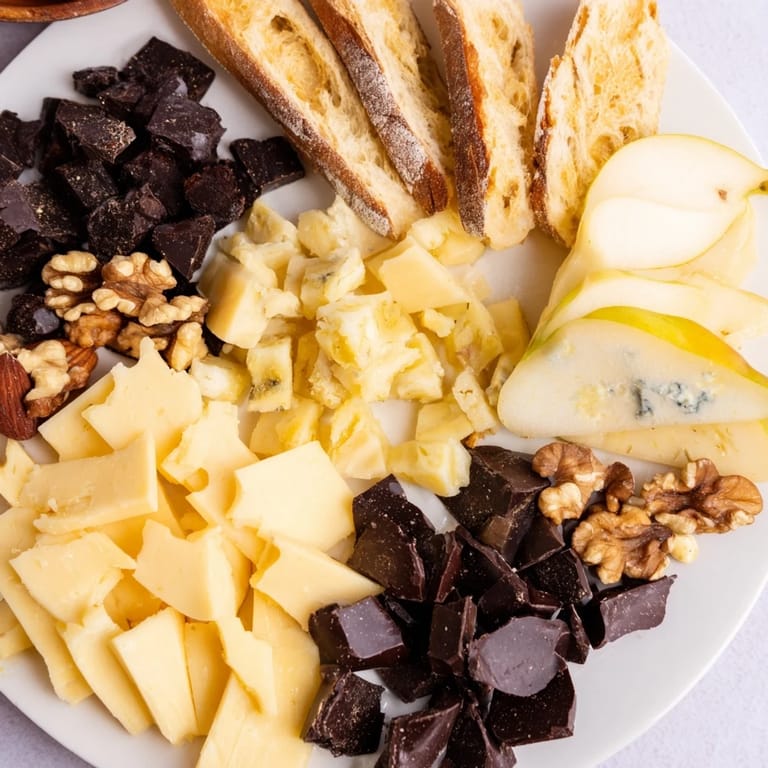
Save This platter is about permission—permission to slow down, to indulge, to gather around something warm and generous. Every time I make it, I'm reminded that the best things in life are simple when you start with good ingredients and the intention to share them with people you care about.